The Government’s Finance Bill which includes the provision for pensions to become subject to inheritance tax (IHT) has reached a critical point in its progress through Parliament.
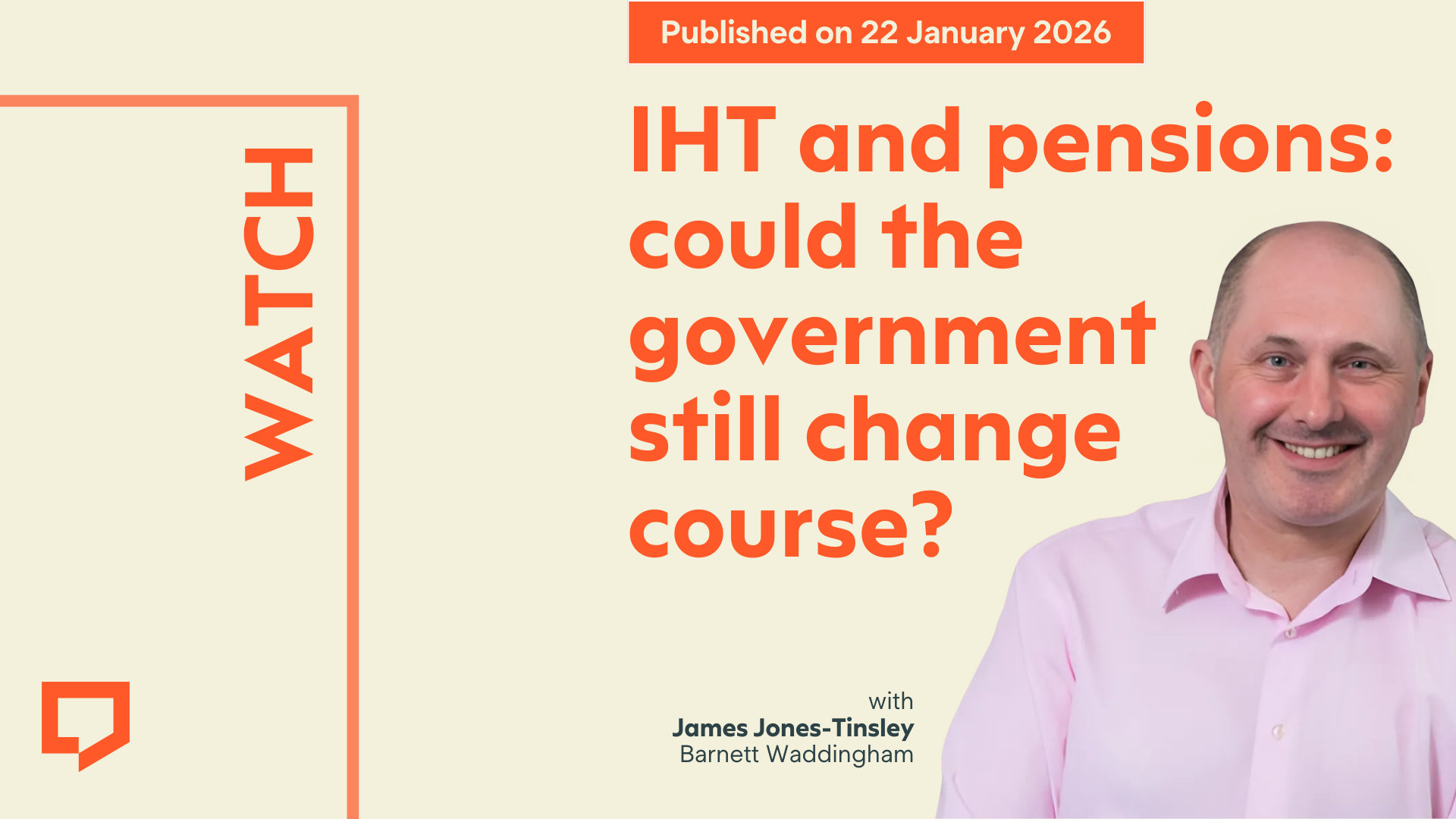
But as James Jones-Tinsley of Barnett Waddingham explains in this 15-minute briefing recorded especially for the Paraplanners’ Assembly, the measure isn’t necessarily a done deal.
Why the next few weeks matter
He suggests that the government’s recent decision to raise its proposed threshold on agricultural and business property relief from £1 million to £2.5 million indicates that the government can be persuaded to rethink its plans.
So the next few weeks matter. And that’s why James is encouraging advice professionals and clients to write to their MPs – not least to encourage the government to consider the practical consequences of its planned changes.
For instance, how reasonable and realistic is it to expect personal representatives, many who are likely to be recently bereaved family members, to successfully negotiate their way through complex pension death benefit rules against the clock?
And is adding to the anxiety of family members worth it when the government’s own projections suggest this will raise £1.5 billion by 2029-30 – a fraction of the £6 billion that is already being collected thanks to freezing of allowances?
What you’ll learn by watching and listening
If you want to know the latest on the progress of the law resulting from last November’s budget and its consequence for advice colleagues and clients, then you’re in the right place.It’s more than a year since speculation ahead of last autumn’s Budget led to a surge of savers raiding their pension pots in a bid to beat rumoured changes to tax-free lump sums.
But when no changes were announced and people sought to reverse their withdrawals, they discovered that the 30-day cancellation rule didn’t apply. Or did it?
That confusion over conduct of business rules led to calls for HMRC and the FCA to clarify whether or not savers could cancel – and they’ve now responded.