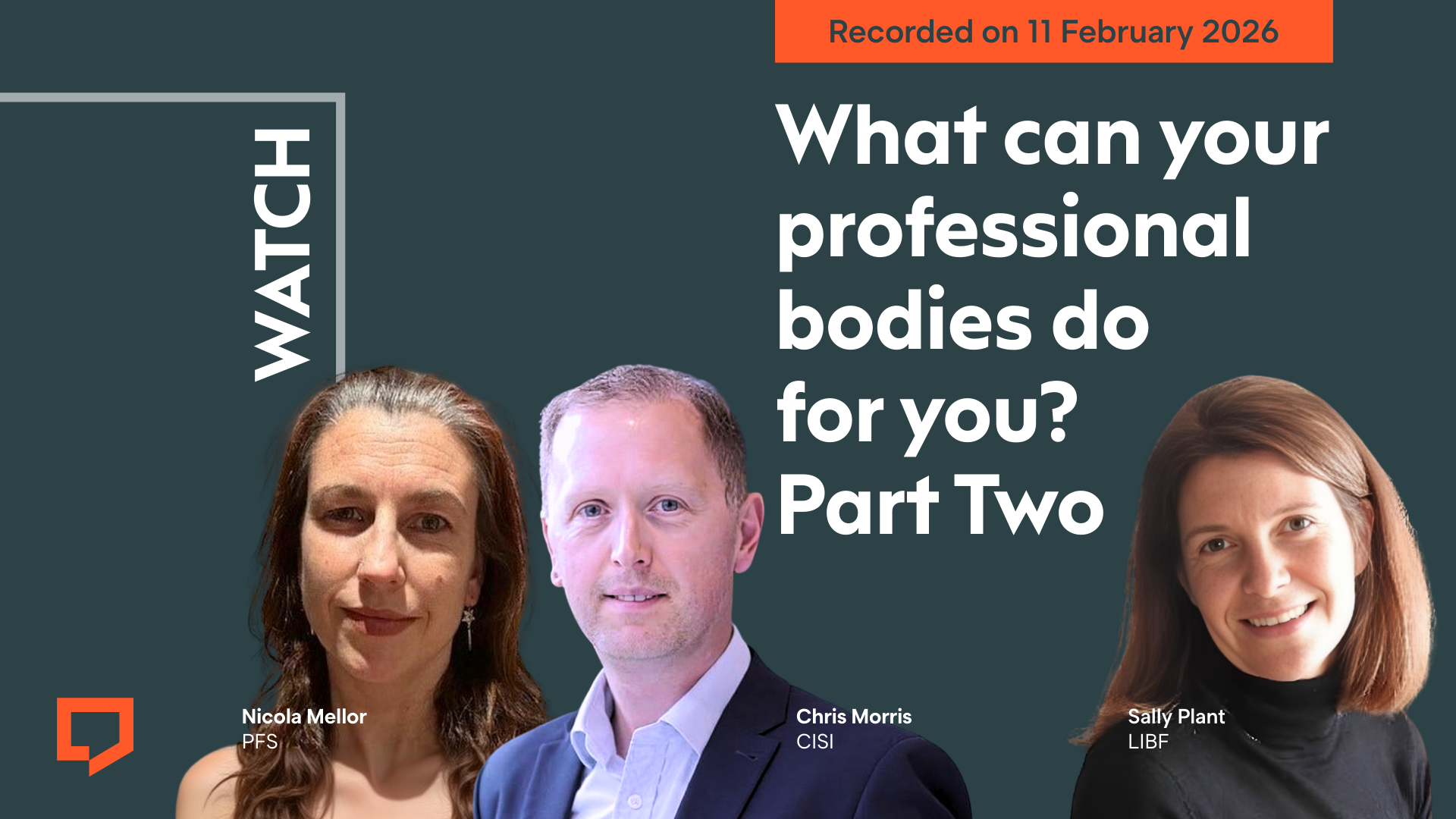
Back in November, guests from CISI, PFS and LIBF joined us to talk about what the professional bodies can do for paraplanners. (If you missed part 1, you’ll find it here.)
But there was too much to cover in just one session. So we invited Nicola Mellor (PFS), Chris Morris (CISI) and Sally Plant (LIBF) back to pick up where they left off.
This time around, they answered questions including which body to join and why, exams and qualifications, the role of CPD and how paraplanners can influence the work of professional bodies.
What you’ll hear
We structured this Assembly around six key areas that came up most often from paraplanners:
- Starting out in the profession: which body to join, what membership actually costs, what support exists for career changers, and what you should prioritise in your first year
- Qualifications and exams: how exams are structured, why they feel designed to catch you out rather than test real knowledge, and whether there’s appetite for more specialist paraplanning qualifications
- Recognition of paraplanning: whether we’ll ever see chartered paraplanner titles, why paraplanning isn’t recognised as distinct from financial planning, and what’s stopping this from happening
- CPD that actually works: why you should need to sit in an exam room if you already manage your own learning, why all the CPD events cluster together, and why you hear budget updates from everyone except the body you actually belong to
- Having your say: how to get involved, whether there’s paraplanner representation on boards, what mechanisms exist to propose changes, and what volunteer opportunities are available
- The future of paraplanning: where the profession is heading and how the bodies are preparing to support paraplanners through changes in technology, regulation and client expectations
What can you expect to take away
You’ll leave with a much clearer understanding of what each professional body offers, which matters when you’re making decisions about where to invest your time and money.
More importantly, you’ll know exactly how these organisations work, how you can influence them, and whether they’re actually listening to what paraplanners need — not just what they think you need.
This is also a chance to hear the professional bodies respond directly to some uncomfortable questions about cost, accessibility, and whether they truly recognise paraplanning as a profession in its own right.