
Welcome to The Self-Assembly Paraplanning Show, a monthly unscripted conversation where we invite a small group of paraplanners to compare notes on what’s actually happening in their world.
Just so you know: guests appear in a personal capacity and not on behalf of the business that employs them.
This month’s host, Julie South, is founder of outsourced paraplanning firm, Bee Paraplanning. Julie is joined by guests Lucy Halliday, a senior paraplanner at Argonaut Paraplanning, and Chris Wormwell, an in-house paraplanner at Wesleyan Financial Services.
Among the topics that Julie, Lucy and Chris cover this month are:
- the UK Government’s Autumn Budget – set for Wednesday 28 October – and what’s rumoured to be in it?
- who’s been hearing about clients asking to take their tax-free cash?
- the potential CGT changes that are on their radars plus chat about IHT and agricultural property relief
- why clients should plan for both sides of care – paying for their own, and understanding what caring for someone else could mean for their finances
- why cash flows should factor in the risk of redundancy and illness (and caring responsibilities)
- what the UK Government’s consultation on the rights of cohabiting couples in England and Wales could mean for things like IHT and wills
It’s an episode that’s big on the potential of cash flows and annual reviews as a way to prompt conversations with clients about the stuff that doesn’t get mentioned as much as it could.
Oh and Lucy and Chris offer their gaming and streaming recommendations for October, plus plugs for events they’re planning to attend, too.
AI in this episode
We used Adobe Podcast’s Enhance tool to clean up audio levels and quality.
We used Canva’s background remover for the head-and-shoulder shots of Julie, Chris and Lucy in the cover image of this episode.
Every year, Scottish Widows survey UK paraplanners to find out how they’re feeling about their work and the changes shaping the profession. And every year, Scottish Widows give the Paraplanners’ Assembly an advance look at what they’ve discovered, before the results are published.
IHT, AI and the future of paraplanning
On 22 October, Harry Keating-Coyne, Intermediary Distribution Manager at Scottish Widows, joined us to discuss the emerging themes from this year’s survey.
IHT: the big story
It’s no surprise that the April 2027 changes bringing pensions into the IHT net are a big shift for advice firms and their clients. But the survey shows it might be a bigger shift than some first currently realise. The research looks closely at how prepared the profession is, including:
- how ready paraplanners feel for the changes
- what firms have already changed or are in the process of changing
- how client conversations and planning strategies are changing
- potential product implications and unintended consequences
- whether they could spark broader intergenerational and whole family planning
AI and the future of advice
Richard and Harry look at what paraplanners and advisers think about AI, Targeted Support and simplified advice. For AI, this covers how far firms are adopting it, how confident people feel, and whether it’s seen as an opportunity or a threat.
Richard and Harry talk about the future shape of advice businesses and the role of paraplanners within them. This includes the impact of regulation on workload (a returning theme from previous surveys), recruitment and changing client expectations.
What can you expect?
This is a chance from you to hear what peers are thinking before the full report lands. You’ll get a sense of how your own firm’s approach to IHT and AI compares with others.
The Assembly lasts one hour and CPD is available.
Watch the replay now.
Host Richard Allum is joined by Transact’s chief development officer, Andrew Cullen-Jones, to explore how paraplanners and the firms they work for can get the most out of advice tech.
Among the topics Richard and Andrew tackle in their half-hour conversation are:
- the enduring issue of rekeying data
- what an API is and what it does
- why you should know which system’s data wins when two disagree
- distinguishing between AI hype and AI help
- how the role of CRMs could change
- why the human side of advice matters
Plus Andrew suggests one thing that all paraplanners and their firms should consider doing before seeking the next bit of software for help.
When launches of new tech and AI innovation seem never-ending, and keeping on top of what’s new feels like an impossible task, this conversation offers a welcome pause for thought.
Most financial plans treat cancer as a rare event, or as though a diagnosis always means the end of the road.
New joint research from Scottish Widows and Macmillan, tells a different story. By 2045, cancer prevalence in the UK is forecast to rise by 58%, taking the number of people living with or beyond cancer to 5.4 million and survival rates have doubled in the last forty years. So, cancer is no longer the death sentence it once was, and that changes what financial planning needs to do.
That’s why we invited Scottish Widows national account manager, Jonathan Hall, to join host Richard Allum and talk through what the research means and help paraplanners understand what it might mean to their day-to-day paraplanning.
John unpacks what’s driving the increase (an ageing population, earlier diagnosis through screening, and improving survival rates), and what it means for clients at every stage: building cash flow models that stress test a plan against a cancer diagnosis, why premiums for the same cover roughly triple by your thirties and more than double again by your forties, and how needs shift from a client in their twenties protecting a lifestyle to one in retirement assuming their savings will simply see them through.
Tune in now to find out how to bring this conversation to life for your clients.
What can you expect?
- the numbers behind a forecast 58% rise in UK cancer prevalence by 2045, and what’s driving it
- how to use cash flow modelling to bring a “what if” conversation to life for clients
- how protection needs and objections shift across generations, from Gen Z to those approaching retirement
- why “I’ve already got cover” and “I’ve got savings to fall back on” are worth gently challenging
- how protection can work as an intergenerational planning tool, including for clients’ adult children
Request a CPD certificate and download Jonathan’s slides
Once you have watched or listened to this episode, you can request a certificate of attendance for 35 minutes’ CPD. To do that, follow the link below where you will also be able to download Jonathan’s slides.
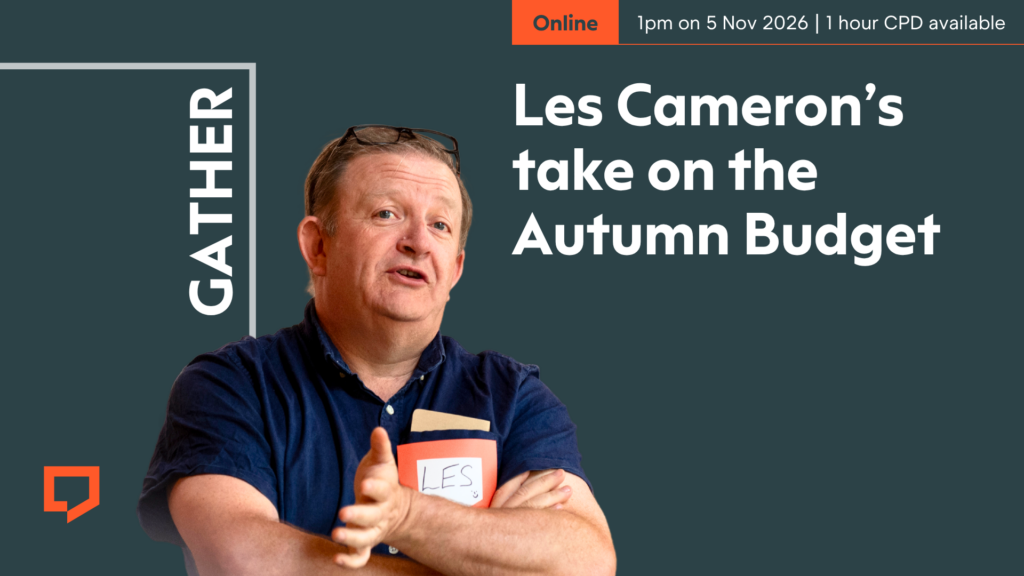
The Autumn Budget lands on 28 October. A week later, we’re sitting down with someone who’ll have properly thought it through.
Les Cameron from M&G joins Richard Allum to unpack what the Budget actually means, for clients, for financial plans, and for paraplanners.
Les needs no introduction in paraplanning circles, and this is your chance to hear his take before you’re the one fielding the questions.
- What the Budget changes (and what it doesn’t)
- The practical implications for planning
- What paraplanners should be thinking about next
There will be CPD available.
Have you ever stopped to think about the assumptions baked into a fact find? A tickbox for ‘marital status’. A question about ‘your wife’ or ‘your husband’. A box that asks for ‘gender’ with only two options to choose from. A form that only makes room for children who are biologically yours.
These assumptions, and experiences of LGBTQ+ clients raise some important considerations for financial planning and, as paraplanners, we are well placed to make sure the file and the advice reflects who the client actually is, not who they’re assumed to be.
In this Assembly, Jawaad Tanwir, of ParaplanX is joined by Esther Clemmey of Integrity365 and Jamie Lowe of True Self Wealth to explore what paraplanners may be unintentionally overlooking when working with LGBTQ+ clients, and how to build a process where those clients feel understood without ever having to justify who they are.
Together, they look at where assumptions most often creep into the advice process – about marriage, gender, children, beneficiaries and ‘chosen family’ – and the practical planning issues that follow including: Wills and intestacy for unmarried couples, pension nominations and protection underwriting.
During this Assembly we discussed:
- what paraplanners may unintentionally overlook when working with LGBTQ+ clients
- the practical planning issues that can arise
- how to build a process in which LGBTQ+ clients feel understood, without making assumptions
Sound like something you’d like to know more about? Tune in now.
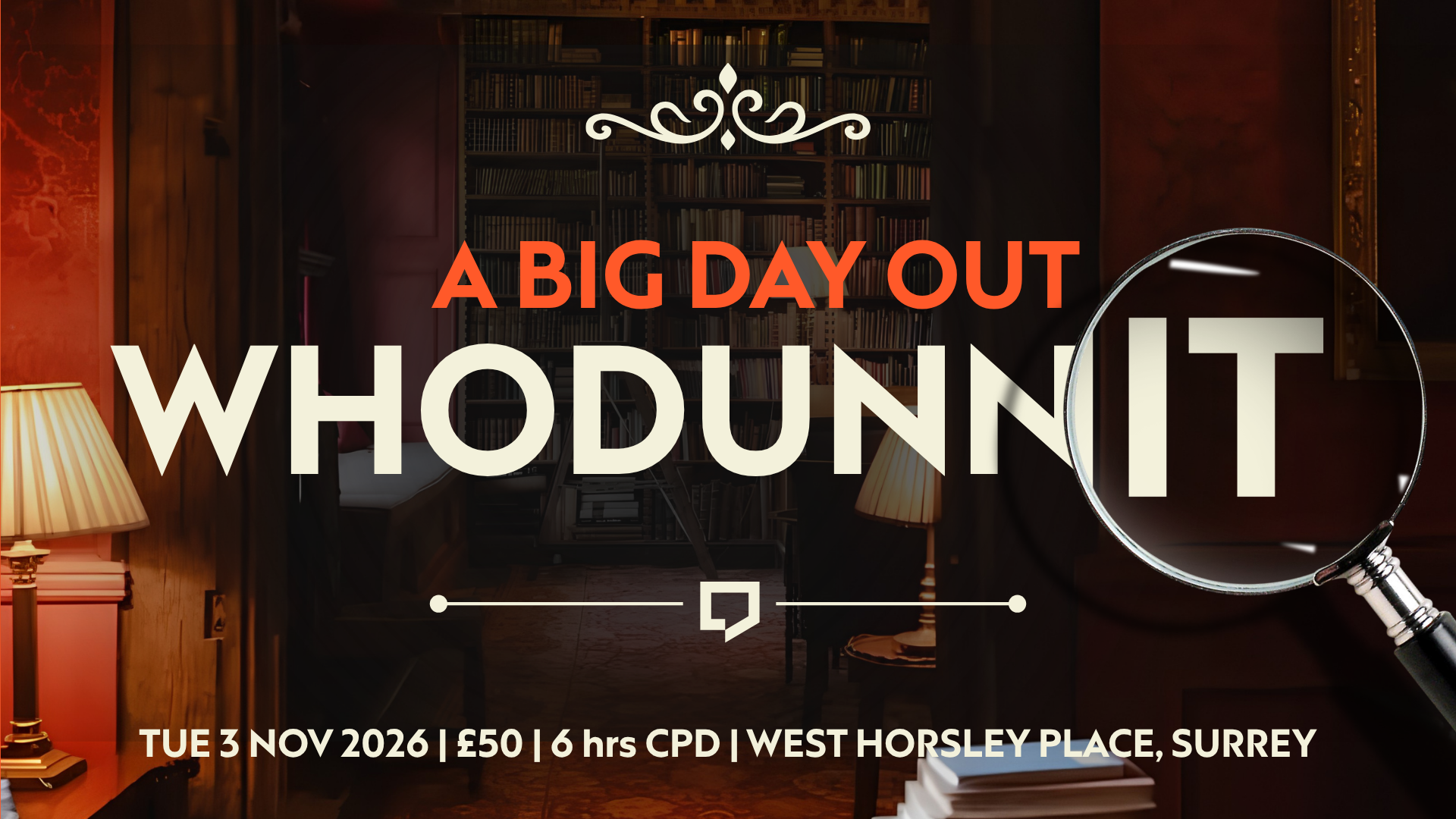
A Kerr-Fuffell family member has snuffed it. But was it foul play? Join paraplanner sleuths to sift for clues and crack the case.
You’re invited to a Big Day Out with a difference.
Because we’d love you to gather with paraplanners from across the UK at West Horsley Place in Surrey from 9am on Tuesday 3 November 2026.
Over the course of the day, you’ll work out which member of the Kerr-Fuffell family stood to gain most from the untimely demise of their (perhaps not so) loved one.
Our writers room of supremely well-qualified paraplanners is busily concocting a series of – fingers crossed – interconnected case studies.
Inheritance tax, pensions, estate planning, wills, lasting powers of attorney, divorce, protection – you name it – we’ll cram it in.
In other words, you’re guaranteed an agenda that will be bursting at the seams with seven hours’ worth of CPD. That’s knowledge and insights that you can apply to client cases right away.
How will the day work?
At 10am, we’ll gather in the Great Hall for your briefing on the untimely demise of Lady Fifi.
Then you’ll join one of four groups, each led by a duo of paraplanning detectives.
In a series of sessions, your group will meet with expert witnesses drawn from our supporters – that’s Aegon, Howden, M&G, Quilter, Scottish Widows, Transact and Wealthtime – to sift evidence contained in case studies.
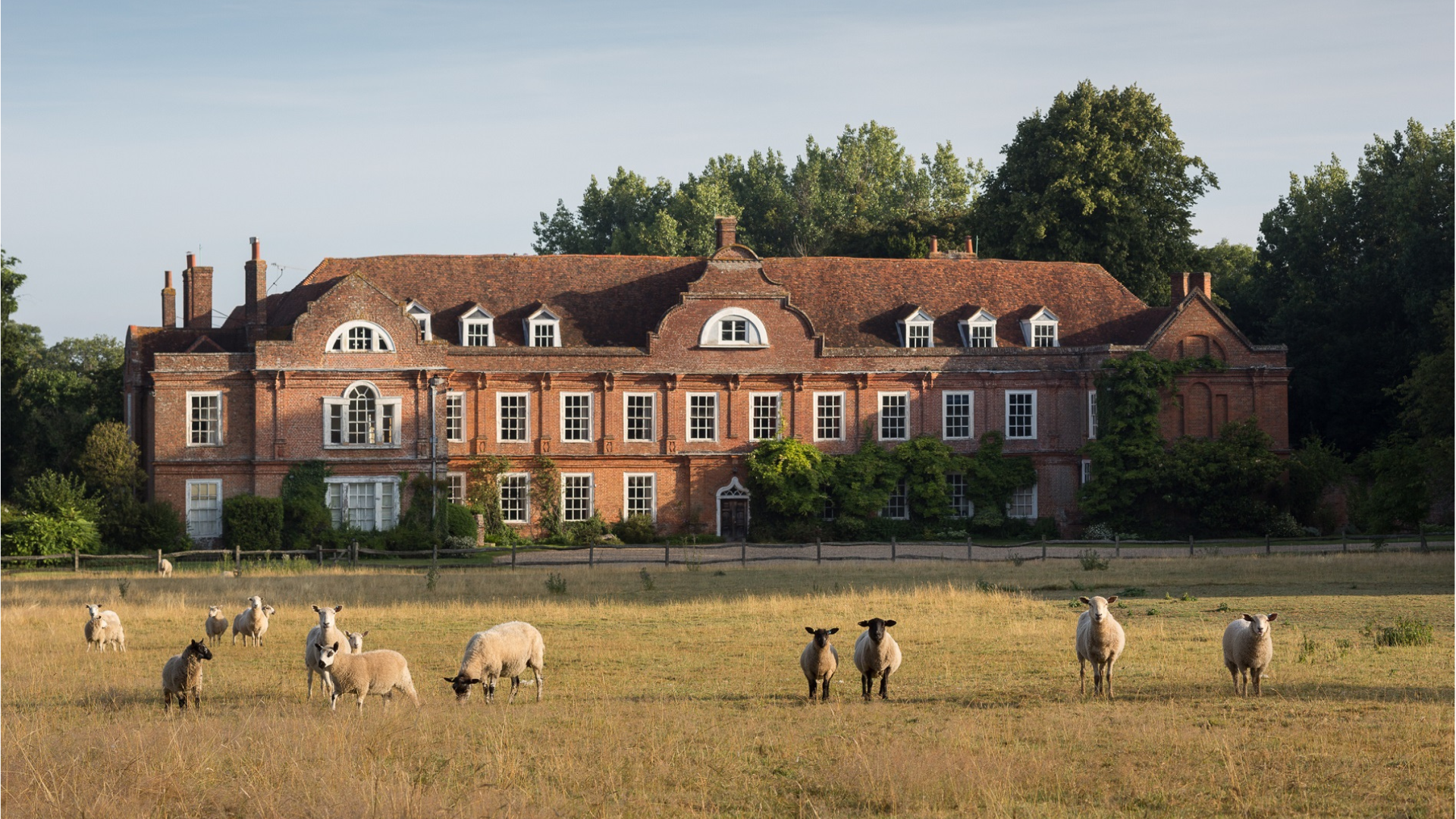
Whoa there! Why does West Horsley Place look familiar?

If you’re a fan of the hit BBC TV comedy ‘Ghosts’, it will.
Because West Horsley Place is Button House!
And do you know what? It looks EXACTLY like it does on the telly – outside and in.
So not only will you get to take part in the Big Day Out, you can sneak a few selfies in the Great Hall, the library, that long red room upstairs, the grand staircase, the garden, even the corridor that leads to the plague pit.
What’s more, we’ll take the traditional ‘school photo’ in front of house.
How exciting is that?!
And in a happy coincidence, we’ll be gathering for our Big Day Out just one week after ‘Ghosts: The Possession of Button House’ is released in UK cinemas.
Will you feed me?

This is a Paraplanners’ Assembly event, so we won’t scrimp on the catering.
Your ticket includes breakfast baps (or butties) on arrival, a delicious hot buffet lunch, plus a sweet treat with your tea in the afternoon.
There will be vegetarian and vegan options. And if there are ingredients you need to be careful of, let us know when you book, and we’ll take care of that.
Surrey? But that’s far far away!
It’s a fair cop. For 12 years we’ve hosted events in the Midlands-ish, so it was reasonably easy for people to get to.
But getting exclusive use of a country estate for a whole day’s Whodunnit that’s just the right size for a Big Day Out – well, that’s quite tricky.
Being big ‘Ghosts’ fans, when we discovered we could have Button House to ourselves for the day, we couldn’t resist.
We know Surrey is a stretch. And if that means you don’t feel able to join us this year, we’ll make it up to you next year. Promise.
Getting there
By car: West Horsley Place is off the A246 between Guildford and Leatherhead. It’s ten minutes’ drive from the A3/M25 intersection. Leave the A3 at junction 10. You can park for free in the visitor car park.
By train: Horsley station is one mile away, with frequent trains from London Waterloo (49-minute journey), Vauxhall, Clapham Junction and Guildford (14-minute journey). Woking station is 8 miles away, with frequent, fast trains to and from London. It takes about 25 minutes to walk from the station to West Horsley Place. It is a lovely walk through the estate, but you will need footwear suitable for wet, muddy or uneven ground. Follow the bridleway and you’ll arrive in the car park and welcome area.
By bus: The 479 Guildford-Bookham-Leatherhead-Epsom service operates roughly hourly. The nearest stop is East Horsley, Duke of Wellington. It takes approximately 7 minutes to walk from the stop. The entrance to West Horsley Place is on the right before you reach St Mary’s Church. Walk down the drive to reach the Welcome Area next to the Barn.
Here’s the bus timetable: Service 479
Where to stay
West Horsley Place has plenty of places to stay. There are two large hotels within three mins of the Big Day Out venue:
De Vere Horsley Estate
Thatchers Hotel
Within 15 minutes’ drive:
What to wear
West Horsley Place is heated throughout. But it’s a rambling old country pile with flagstone floors on the ground floor, so we’re suggesting you dress for cosy toes and tops (and – what’s to lose – cosy everywhere really too).
Is West Horsley Place accessible?
The ground floor of the Manor House is wheelchair accessible, with a platform lift to the first floor. If you’d find the short walk – or gravel path – from the car park difficult, let us know when you book and we’ll contact the team at West Horsley to make sure you’re looked after when you arrive.
Book your spot now
A Big Day Out Whodunnit costs £50. But there are limited places, so don’t hang about. To book your spot now, follow this link:
Group bookings
We’ve limited group bookings to five places. If you want to book more than that, email us and we’ll add you to the waiting list.
Temporary pension income guarantees are nothing new to retirement income planning. But how much do you actually know about how they work?
During this Online Assembly, Richard Allum and M&G’s Mark Devlin take a practical look at temporary pension income guarantees, and what they mean for cases that you may work on.
During this Assembly, Mark explained:
- what temporary guarantees are and how they work
- the options available to clients
- what happens to death benefits
- why you might consider using them in a client’s retirement plan
Plus they added a couple of real-world case studies into the mix to bring it all to life.
What can you expect to take away?
A clearer, more practical understanding of temporary pension income guarantees, and a sense of when and why they might be worth putting in front of a client.
Ready to top up your knowledge? Catch up now.
In this month’s Self-Assembly Paraplanning Show, host and ParaplanX founder Jawaad Tanwir is joined by Ceetal Katechia from Cooper Parry Wealth and Luke Sparkes from Sparkes Paraplanning for this month’s unscripted conversation in which paraplanners compare notes on what’s happening in their world and the wider paraplanning profession.
Among the things on Jawaad, Ceetal and Luke’s minds in September 2026 are:
- The incoming pension and IHT changes – especially the work they’re doing to help clients try to simplify things before April 2027
- The way the focus of client and adviser conversations have shifted from decades of ‘don’t touch your pension’ to factoring pension savings into IHT calculations – it’s a big change
- The FCA’s simplified advice proposals: what could a more streamlined process mean for the advice gap? Is there a risk of sacrificing the place of professional judgment in the interests of speed? Could a reduced suitability letter serve some clients better anyway?
- Where AI does and doesn’t fit into paraplanning
- UK life expectancy fell over the last decade so what might that mean for cashflow assumptions?
- And more generally, what are the wider forces shaping how people plan for their financial futures?
This is a wide-ranging chat among paraplanners which covers some crunchy and very topical issues. Is what’s on your mind on the mind of other paraplanners? Listen now and find out.
You may like to know…
Thanks for your interest in this Self-Assembly Paraplanning Show. Just so you know, guests appear in a personal capacity and not on behalf of the business that employs them.
AI in this episode
We used Adobe Podcast’s Enhance tool to clean up audio levels and quality, and Podcastle’s text-to-voice feature to generate the listener message at the start of the episode. We use Canva’s background remover for the head-and-shoulder shots of Jawaad, Ceetal and Luke in the featured image for this episode.
In their regular quarterly political catch-up, host Leanne Pickering from Pivotal Paraplanning and self-invested pensions technical specialist at Barnett Waddingham (soon to be called Howden), James Jones-Tinsley, to chat about political goings on over Parliament’s summer recess, and what paraplanners should look out for in the new Parliamentary session.
Their conversation covers:
- Andy Burnham’s by-election win and rise to become the UK’s new Prime Minister
- Ministerial appointments in Burnham’s first Cabinet reshuffle including the arrival of John Healey as Chancellor of the Exchequer
- The Clacton by-election and what Reform’s result there might tell us about the wider picture
- The run-up to the 28 October Budget – including possible changes to capital gains tax and a windfall tax on oil companies or banks; and
- Gaps left in HMRC’s technical guidance on IHT and pensions – and the pressure that puts on personal representatives
Leanne and James also discuss whether the new Prime Minister might call a snap election, and whether the IHT on pensions rules could yet change before April 2027.
So if you like to keep half an eye on Westminster, this one’s well worth your time.